Two silicone tubes can look almost identical but perform differently in service. For purchasing teams sourcing tubing for food processing, laboratory equipment, or fluid transfer systems, choosing the wrong material can affect fluid cleanliness, pressure capability, and service life. Understanding platinum silicone tubing helps buyers compare curing methods, evaluate application requirements, and select a suitable construction before production begins.
Key Takeaways
-
Platinum curing uses a platinum catalyst to crosslink silicone polymers.
-
Platinum-cured formulations can have fewer potential curing-related residues than peroxide-cured alternatives.
-
Chemical compatibility depends on the fluid, concentration, temperature, and exposure conditions.
-
Tubing dimensions, pressure requirements, and applicable compliance standards should be confirmed before ordering.
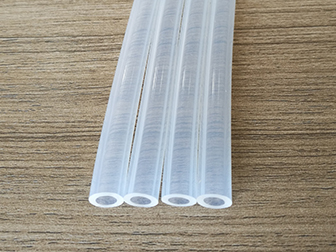
What Is Platinum Silicone Tubing?
Platinum silicone tubing is silicone rubber tubing manufactured through a platinum-catalyzed curing process. It is commonly used in fluid transfer applications where flexibility, clarity, and controlled material characteristics are important.
What Is Platinum Silicone Made Of?
The base material consists of silicone polymers and other formulation ingredients. During curing, a platinum catalyst promotes a chemical reaction that crosslinks the polymer chains, transforming the uncured compound into an elastic material.
Platinum acts as a catalyst rather than the main structural material. The finished tubing's properties depend on its formulation, curing conditions, and manufacturing controls.
Why Is Silicone Tubing Platinum Cured?
Platinum curing is often selected when manufacturers want to limit certain residues associated with curing and produce tubing for demanding fluid-contact applications. It can also support clear tubing with a smooth internal surface.
However, the curing method alone does not establish a product's purity, chemical resistance, or regulatory compliance. These characteristics must be evaluated for the finished product.
Platinum vs Peroxide Cured Silicone Tubing
Both platinum-cured and peroxide-cured tubing are made from silicone rubber, but they use different curing mechanisms. The appropriate choice depends on fluid-contact requirements, mechanical demands, and budget.
|
Comparison
|
Platinum-Cured Tubing
|
Peroxide-Cured Tubing
|
|
Curing method
|
Platinum-catalyzed addition cure
|
Peroxide-initiated cure
|
|
Potential curing residues
|
Generally fewer potential cure-related residues
|
Residues may remain if processing and post-curing are insufficient
|
Clarity
|
Available in clear formulations
|
Depends on formulation
|
Extractables
|
Often considered for applications with stricter extractables requirements
|
Depends on formulation and post-curing
|
Repeated compression
|
Depends on the specific formulation
|
Some formulations may suit repeated compression applications
|
Cost
|
Generally higher
|
Often more economical
|
These are general tendencies rather than universal rules. Mechanical strength, flexibility, clarity, and service life depend on the formulation and manufacturing process as well as the curing method.
Neither method is automatically better for every application. Buyers should compare product-specific data against the actual operating requirements.
What Are the Key Benefits of Platinum Silicone Tubing?
1. Lower Potential Extractables
Platinum-cured formulations can reduce certain curing-related residues, which may be important when unwanted substances entering a transferred fluid are a concern. Actual extractables performance depends on the formulation, post-curing process, and finished-product testing.
2. Clarity and a Smooth Internal Surface
Clear tubing allows operators to observe fluid movement and identify visible changes, such as discoloration or suspended particles. A smooth internal surface can support fluid handling and cleaning when the system is properly designed.
Transparency alone does not establish cleanliness or suitability for every hygienic process.
3. Wide Temperature Capability
The listed operating temperature range for SUNRISE platinum-cured silicone tubing is -55°C to +250°C. This range can be relevant to systems exposed to significant temperature changes.
Actual suitability depends on the selected construction and operating conditions, including pressure, fluid exposure, and continuous or intermittent use.
4. Resistance to Ozone and Weathering
Silicone rubber generally offers good resistance to ozone and environmental weathering. These properties can be useful in outdoor or changing environmental conditions, although actual service life depends on exposure, mechanical loading, and installation.
What Is Platinum Silicone Used For?
-
Platinum-cured tubing is used in fluid transfer systems where flexibility, temperature performance, and fluid-contact characteristics matter.
-
Food and beverage equipment: Suitable tubing can transfer water, milk, and beverages when the finished product meets the applicable food-contact requirements.
-
Laboratory and bioprocess equipment: Clear tubing can support fluid transfer and visual monitoring when material compatibility and extractables are important.
-
Pharmaceutical-related equipment: Selection should account for cleanliness requirements, fluid-contact conditions, testing data, and applicable regulations.
Medical and healthcare equipment: Suitability depends on the specific application, biocompatibility evidence, and relevant regulatory requirements.
Construction is another important consideration. Unreinforced tubing may suit applications where flexibility and compact routing are priorities. Polyester-braid-reinforced silicone hose incorporates polyester yarn within the wall to support higher-pressure applications. Its suitability depends on the specified pressure, dimensions, fittings, and operating conditions.
Platinum Cured Silicone Tubing: Chemical Compatibility
Platinum curing does not make silicone resistant to every chemical. Compatibility depends on the formulation and the conditions under which the tubing operates.
Before selecting a product, identify the transferred fluid, its concentration, operating temperature, and contact duration. Some chemicals can cause swelling, changes in mechanical properties, or material deterioration.
For critical applications, request compatibility data for the specific fluid and tubing construction. Testing under representative operating conditions may be necessary when published data is insufficient.
Is Platinum Silicone Safe?
Platinum-cured silicone is often considered for applications where material cleanliness and fluid-contact performance are important. However, the term "platinum-cured" alone does not guarantee suitability for food processing, pharmaceutical production, or medical use.
SUNRISE lists its platinum-cured silicone tubing products against requirements including FDA 21 CFR 177.2600, RoHS, REACH, and European Regulation (EC) 1935/2004. Buyers should verify the documentation applicable to the exact product and intended use.
FDA 21 CFR 177.2600 addresses rubber articles intended for repeated food contact and specifies relevant material and extractives requirements. Compliance should be assessed against the applicable provisions rather than inferred from the curing method alone. (Source: 21 CFR 177.2600.)
Why Is Platinum Silicone So Expensive?
Platinum-cured tubing generally costs more than comparable peroxide-cured alternatives because of catalyst and formulation costs, as well as potential differences in processing and quality control.
Dimensions, wall thickness, tolerances, order quantity, and additional testing requirements also affect the final price. For procurement teams, the practical approach is to compare the total cost of meeting the required performance and compliance specifications rather than unit price alone.
How to Select the Right Platinum Silicone Tubing
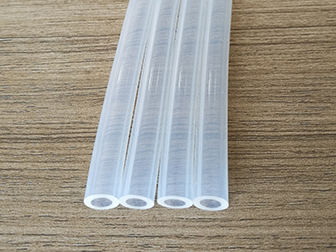
Before requesting a quotation, prepare the technical information needed to assess the tubing construction.
-
Fluid compatibility: Identify the transferred medium, concentration, and contact conditions.
-
Temperature: Specify the normal operating range and any short-term temperature peaks.
-
Dimensions: Confirm the required inner diameter, outer diameter, wall thickness, and length.
-
Pressure: State the working pressure and pressure fluctuations.
-
Compliance: Identify applicable food-contact, industrial, or other regulatory requirements.
-
Construction: Determine whether unreinforced tubing is sufficient or a polyester-braid-reinforced hose is more suitable.
When Should You Choose Reinforced Tubing Instead?
Reinforced construction is worth considering when an application requires additional pressure capability while retaining flexibility. The decision should be based on the required working pressure and the complete hose assembly, not simply the presence of a braid.
For lower-pressure transfer applications where flexibility and straightforward routing are the main priorities, unreinforced tubing may be sufficient. For higher-pressure service, confirm the rated working pressure, temperature limitations, fitting compatibility, and relevant test data before selecting a reinforced option.
For application-specific requirements, review the available platinum silicone tubing and platinum cured reinforced hose options. If your project requires a custom diameter, wall thickness, or reinforcement structure, discussing the application conditions first can help determine a more suitable tubing specification.
FAQ
What Is Platinum Cured Silicone Medical Tubing?
It is silicone tubing manufactured using a platinum-catalyzed curing process for a specific medical or healthcare application. Suitability depends on the finished product's biocompatibility, testing, sterilization compatibility, and applicable regulatory requirements.