The performance of a
braided silicone hose depends on more than the presence of textile reinforcement. Braid layer count, weaving construction, and hose dimensions all influence how it responds to internal pressure, bending, and pulling forces.
For buyers and engineers, the important question is not simply whether a hose has more layers. It is whether the reinforcement addresses the actual service requirement. This guide compares single-ply, double-ply, and stretch-resistant constructions, explains how to interpret their performance, and identifies the data needed for selection.
Key Takeaways
-
Polyester braiding helps restrain expansion caused by internal pressure.
-
Single-ply and double-ply describe layer count; stretch resistance also depends on weaving construction.
-
Additional reinforcement does not automatically double the working pressure.
-
Product-specific ratings matter more than general claims about layer count, flexibility, or temperature resistance.
What Is a Braided Silicone Hose?
A braided silicone hose consists of a silicone rubber body with a textile braid embedded in the hose wall. Polyester is a common reinforcement material. In this construction, silicone forms the inner tube and outer cover, while the braid helps restrain pressure-driven expansion.
The braid does not determine performance on its own. Hose diameter, wall thickness, silicone compound, yarn construction, and manufacturing quality all contribute to the finished product.
Braided construction should also be distinguished from curing method. “Polyester-braided” describes the reinforcement, while “platinum-cured” describes how the silicone is processed. Neither term, by itself, establishes a working-pressure rating or approval for a particular application.
Reinforcement Layers and Stretch-Resistant Designs
SUNRISE offers single-ply, double-ply, and stretch-resistant braided constructions. These should not be treated as three steps on a universal performance scale: the first two describe braid-layer count, while the third addresses resistance to stretching.
Construction
|
Structural distinction
|
Main selection question
|
Single-ply braid
|
One embedded polyester braid layer
|
Does the selected size meet the required pressure, temperature, and routing conditions?
|
Double-ply braid
|
Two embedded polyester braid layers
|
What verified performance difference does the second layer provide?
|
Stretch-resistant design
|
Special weaving construction designed to resist stretching
|
What pulling load and extension limits apply to the hose and its connections?
|
These structural descriptions reflect the available product categories. Actual performance must be established for the selected hose.
Single-Ply Braided Silicone Hose
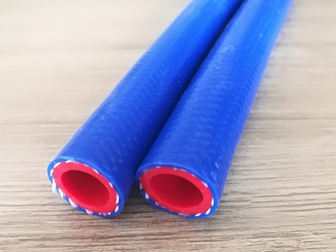
A single-ply design uses one layer of open-mesh polyester braiding within the silicone hose wall. It provides textile reinforcement without adding a second braid layer.
One application is automotive heating circuits. The 1-Ply Reinforced Silicone Heater Hose is listed as meeting the performance and physical criteria of SAE J20 R3. This is a statement about the specified product, not a standard automatically met by every single-ply silicone hose.
Explore the 1-Ply
Reinforced Silicone Hose range.
Double-Ply Braided Silicone Hose
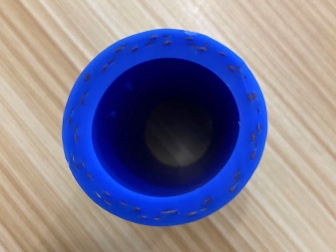
A double-ply construction incorporates two polyester braid layers. The additional layer changes the reinforcement structure, but its practical benefit must be assessed through the product’s pressure, dimensional, and installation data.
The 2-Ply Reinforced Silicone Heater Coolant Hose is intended for automotive heating and cooling systems. Its product listing also states compliance with the performance and physical criteria of SAE J20 R3.
When comparing single-ply and double-ply products, use equivalent dimensions and operating conditions. Comparing different hose diameters or temperatures can obscure the effect of the reinforcement itself.
Explore the
2-Ply Reinforced Silicone Hose range.
Stretch-Resistant Braided Construction
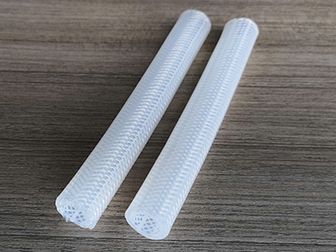
Stretch resistance depends on weaving construction, not simply the number of reinforcement layers.
The stretch-resistant design combines open-mesh polyester braiding with a construction intended to resist stretching under pulling forces. This addresses a different performance requirement from pressure containment alone.
This construction is used in shower-hose applications, where pulling during handling can affect hose dimensions and connection retention. The stretch-resistant shower hose is listed with a pull-force capability of 50 kgf. The applicable size, loading method, duration, and end connections should be confirmed before this figure is used as a design value.
Explore the
Stretch-Resistant Braided Hose range.
How Reinforcement Affects Pressure Performance
The braid restrains hose-wall expansion, but pressure capability depends on the complete construction.
Important factors include:
-
Hose dimensions: Inside diameter, wall thickness, and dimensional tolerances.
-
Reinforcement design: Yarn material, braid coverage, orientation, and layer count.
-
Operating temperature: The pressure rating must apply at the intended service temperature.
-
Installed assembly: Fittings, clamps, and connection geometry must also suit the application.
A second braid layer does not automatically produce twice the working pressure. The relationship must be demonstrated by data for the actual product.
Working Pressure vs. Burst Pressure
Working pressure is the allowable operating pressure under specified conditions. Burst pressure is a destructive-test result or specified minimum burst threshold; it is not the permitted continuous operating pressure.
Published data should identify the hose size and test temperature. Pressure and burst ratings should be compared for individual hose sizes rather than treated as one universal value for an entire product range.
Do not calculate a working pressure from a burst value using an assumed safety factor. Use the manufacturer’s documented rating for the intended service.
Flexibility, Bend Radius, and Temperature
A hose can feel flexible in the hand yet still require more installation space than expected. Minimum bend radius is a more useful routing reference than descriptions such as “highly flexible.”
Compare bend-radius data for the selected size, and ensure the installed hose is not forced into a tight bend at its connections. Excessive bending or twisting can place additional stress on the hose during operation.
Temperature figures also need context. A material temperature range, flexibility range, or unpressurized limit should not automatically be treated as the operating range of a pressurized hose assembly. Ask for the continuous service temperature and working-pressure rating together.
Applications: Match the Construction to the Task
Automotive Heater and Coolant Circuits
The hose must match the vehicle’s coolant, pressure, temperature, routing, and applicable specification. Both single-ply and double-ply heater-hose products are available for these applications, but layer count alone is not a substitute for the required product specification.
Equipment Fluid Transfer
Braided silicone hoses are used as flexible fluid-transfer connections. Selection depends on the conveyed medium, pressure, temperature, and connection design. Supplier specifications should identify the hose material, reinforcement, and finished assembly requirements.
Shower and Handling Applications
Where the hose is regularly pulled, resistance to stretching and connection retention become important. A pressure-focused braid and a stretch-resistant construction should not be assumed to solve the same problem.
Food-Contact and Hygienic Equipment
Food-contact use requires documentation for the specific material and intended contact conditions. Silicone construction, polyester reinforcement, or platinum curing alone does not establish compliance. Qualified products should be accompanied by application-specific compliance or validation information.
Specifications to Request Before Ordering
Requirement
|
Information to obtain
|
Dimensions
|
Inside diameter, outside diameter, wall thickness, length, and tolerances
|
Reinforcement
|
Braid material, layer count, and special weaving features
|
Pressure
|
Working pressure at service temperature and any pressure-cycling limits
|
Burst testing
|
Minimum value, hose size, temperature, and test method
|
Routing
|
Minimum bend radius and installation restrictions
|
Pulling loads
|
Applicable force, extension limit, test duration, and connection arrangement
|
Compatibility
|
Conveyed medium, cleaning agents, and exposure conditions
|
Documentation
|
Relevant product standards, compliance statements, and test records
|
A useful comparison is between complete specifications under equivalent conditions, not between “single-ply” and “double-ply” labels alone.
Discuss Your Application with SUNRISE
For buyers comparing
silicone braided hose manufacturers, it is important to review the reinforcement design, dimensions, and operating requirements together. SUNRISE supplies single-ply, double-ply, and stretch-resistant braided silicone hose constructions.
To discuss a suitable option, send your application details, including the conveyed medium, operating pressure and temperature, hose dimensions, connection design, and any pulling or movement requirements.
Contact us with your drawing, sample, or specifications to request an application-based quotation.
Frequently Asked Questions
Can a braided silicone hose be used for vacuum applications?
Not automatically. Reinforcement intended to resist internal pressure may not prevent collapse when the pressure inside the hose is lower than the pressure outside it. Obtain a vacuum rating for the specific construction, diameter, and temperature.
Does double-ply reinforcement always mean a stiffer hose?
No. Flexibility also depends on wall thickness, yarn construction, silicone properties, and hose dimensions. Compare minimum bend radius and installation data rather than relying on layer count alone.
Does a braided silicone hose require special clamps or fittings?
Connection requirements depend on the hose dimensions and operating conditions. Use hardware suitable for the hose and connection design, providing retention without damaging the silicone wall.